The Dutch rowing stroke

The draw

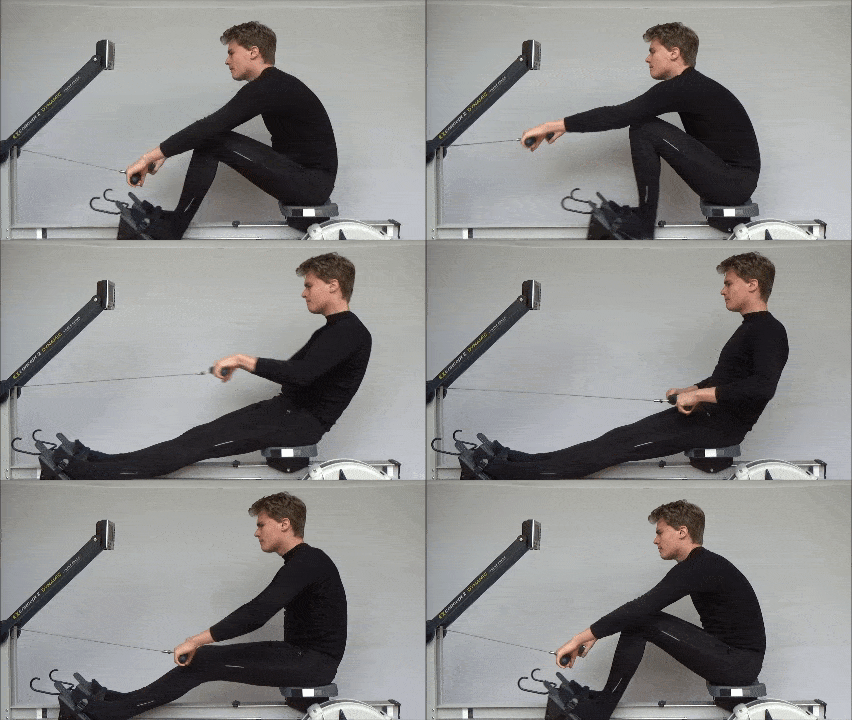
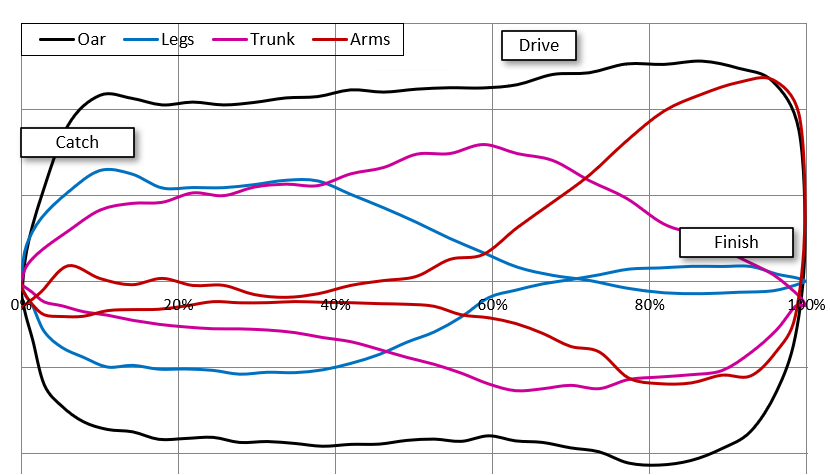
Legs, trunk and arms are used one after the other. The draw starts with a fierce leg drive. At about 40% of the draw length, the trunk takes over the propulsion of the legs. At about 60% of the draw length, the arms take over the thrust of the trunk.
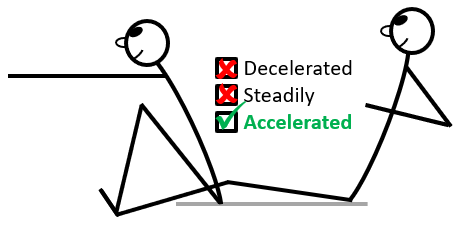
To compensate for the acceleration of the boat, which - from the rower's perspective - causes the water to flow faster, the handles must be drawn and faster (accelerate) towards the trunk. This acceleration ideally continues until above the knees in the recovery (J-stroke).

Wait for the video

Related faults and drills

Use the trunk too early
rowing No pressure after the catch fault No pressure after the catch
rowing Digging dee fault Digging deep
rowing Kicking through the seat fault Kicking through the seat
rowing Seesawing of the blade fault Seesawing of the blade
rowing Overstretching the legs fault Overstretching the legs
rowing Draw not finished fault Draw not finished
rowing Pressureless end draw fault Pressureless end draw
rowing Not enough lay-back fault Not enough lay-back
rowing  fault Too much lay-back
rowing Too much lay-back fault Pull the trunk over the handle(s)
Crew rowing Unequal stroke length fault Crew - stroke length
Crew rowing Unequal stroke segments fault Crew - Unequal stroke segments
Crew rowing Unevenly movement sequence fault Crew - Unevenly movement sequence
Crew rowing Unequal power distribution fault Crew - Unequal power distribution
Rowing Practice draw sequence Exercise Practice draw sequence
Rowing Practice leg pressure Exercise Practice leg pressure
Rowing Trunk only rowing Exercise Trunk only rowing
Rowing Vary blade height Exercise Vary blade height
Rowing Vary trunk rotation Exercise Vary trunk rotation
Rowing Practice finish hand height Exercise Practice finish hand height
Rowing  with emphasising Exercise Rowing with emphasising
Rowing Lengthening the draw Exercise Lengthening the draw
Rowing Adding rowers Exercise Adding rowers
Rowing Drifting stroke Exercise Drifting stroke

Observe: Catch
Analyze Finish

This article was translated automatically and is provided to you for free. You are most welcome to improve it!

© 2016 - 2025 Jeroen Brinkman